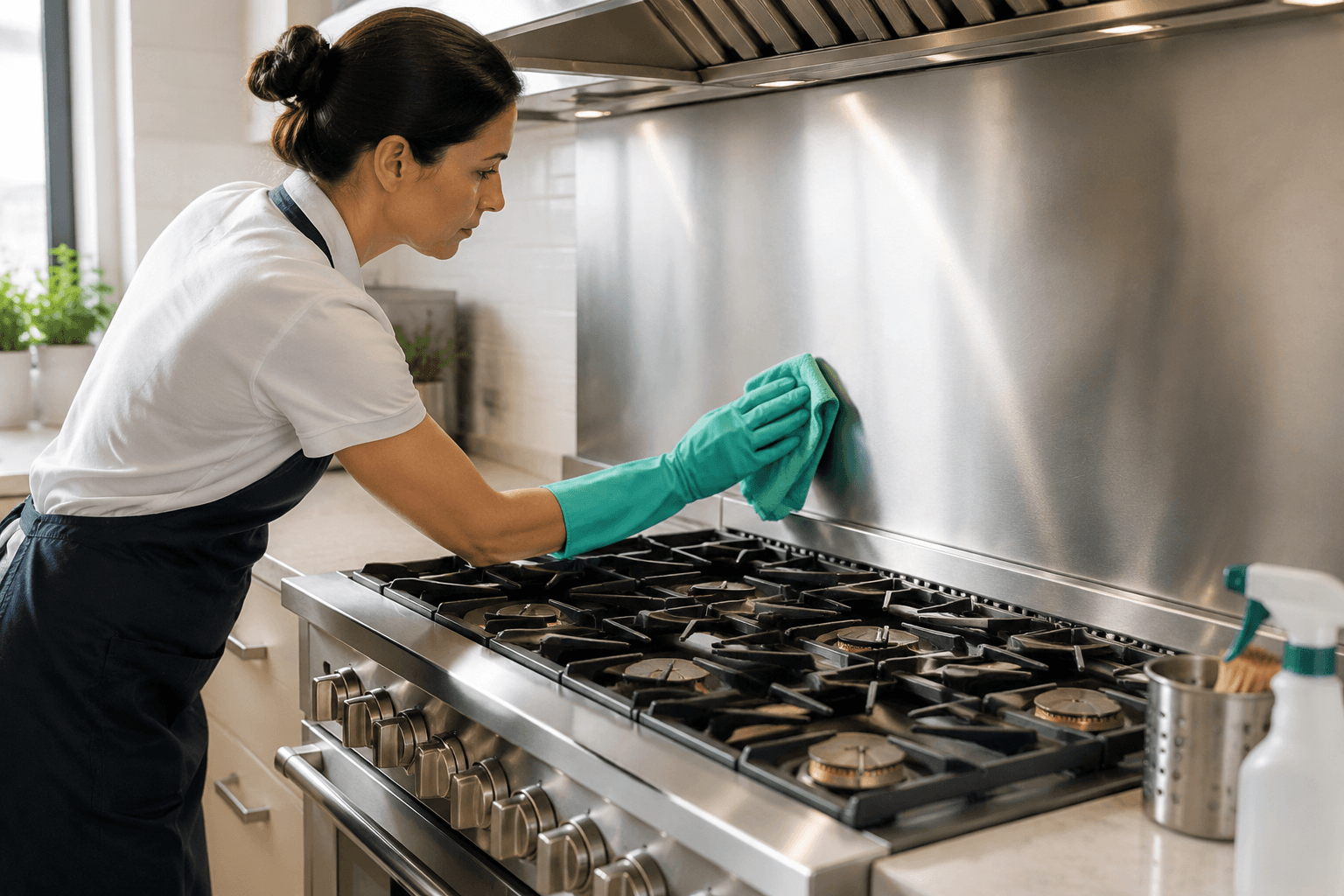
Cleaning tips
Bathroom Deep Cleaning Guide: Limescale, Tile and Glass
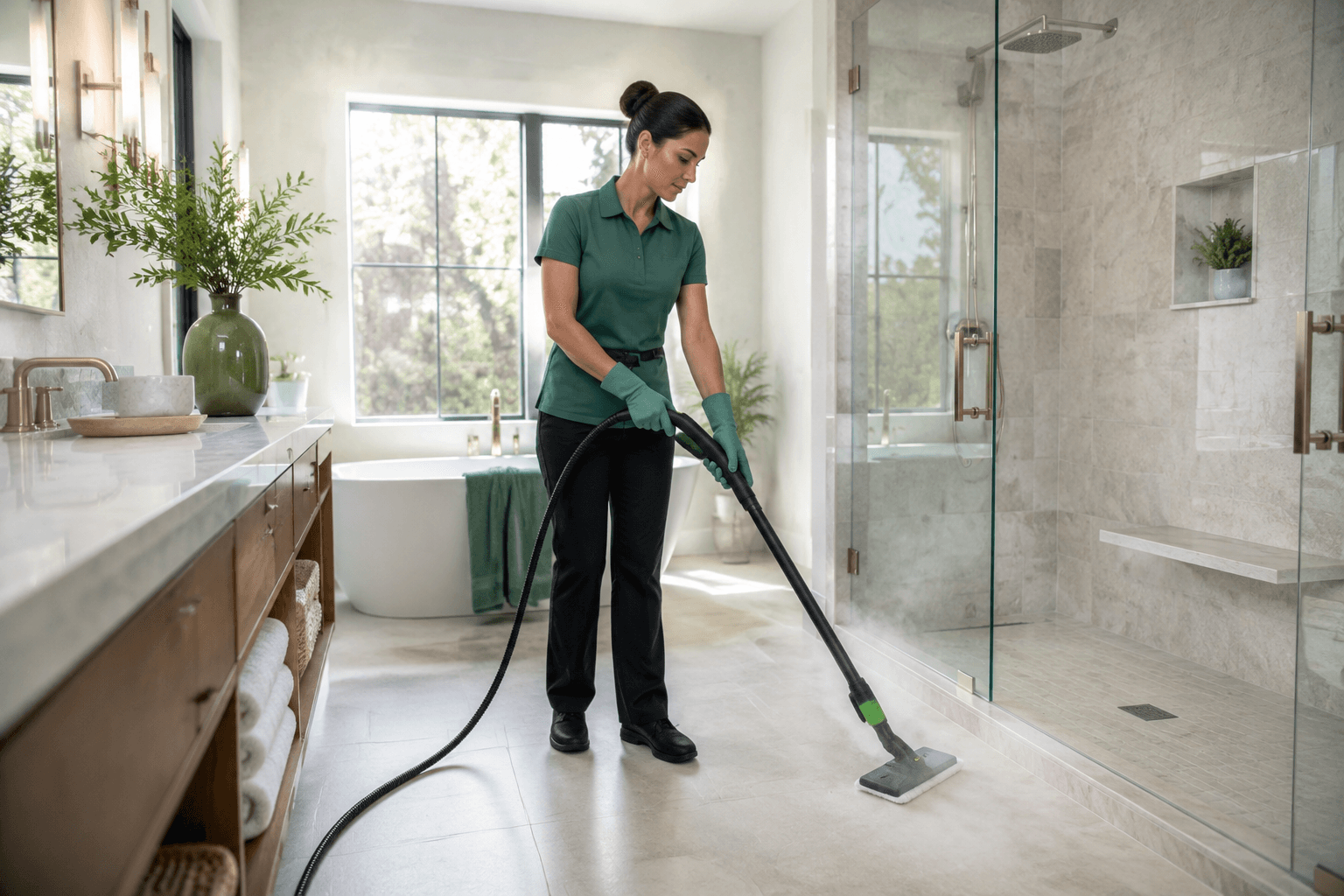
Bathrooms commonly deal with limescale, soap residue, moisture stains, and grime in the grout between tiles. Each needs its own product and the right amount of contact time. A product that's too acidic can damage natural stone, metal fittings, or the grout itself.
How the cleaning works
Work starts with assessing the surfaces and clearing away dry dust. Faucets, glass, tile, the tub or shower, and any accessible grout are then treated separately. Products should never be mixed, especially chlorine-based and acidic ones. Ventilation, gloves, and a thorough rinse of the surface are all needed.
When steam helps
Steam can help on some heat-resistant surfaces and hard-to-reach spots, but it isn't a universal fix either. Servio's steam disinfection service is only used after checking a surface's heat resistance. Damaged silicone or deep-set mold sometimes calls for replacing the material and fixing the moisture source, not more cleaning.
Frequently asked questions
Can mold always be removed
A surface trace can be cleaned, but deep damage means fixing the moisture source or replacing the material.
Is steam suitable for everything
No — the material's heat resistance is checked first.
How can I reduce limescale buildup
Wipe water off the glass regularly and keep surfaces dry and ventilated.